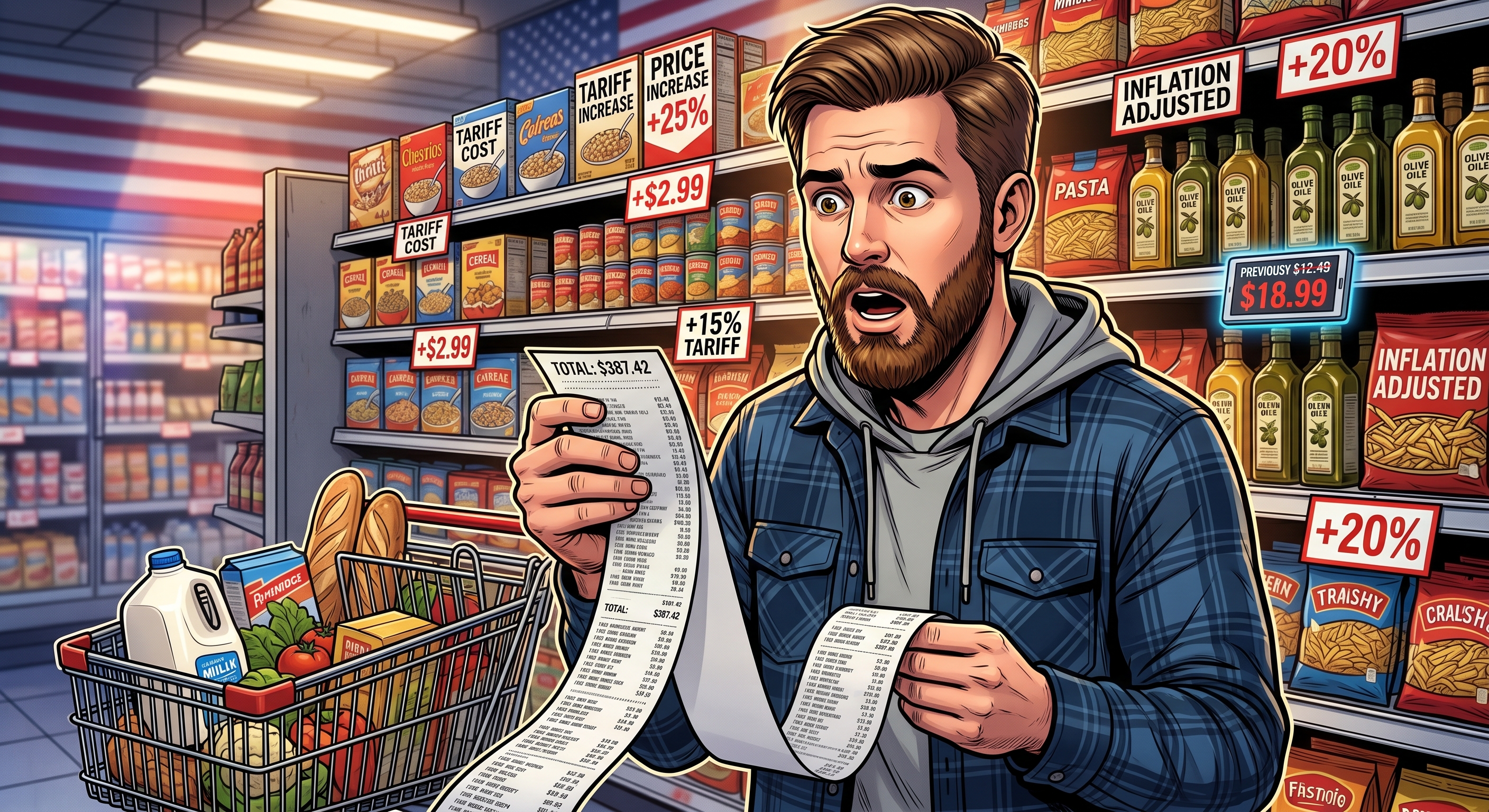
You're at the grocery store and your usual cart costs $40 more than it did a year ago. You check prices on a new laptop and something feels off. You glance at gas prices and just keep walking. Something is clearly happening to your money — and everyone seems to have a different explanation.
Some people blame tariffs. Some blame inflation. Some say they're the same thing.
They're not. And understanding the difference isn't just trivia — it could change how you manage your money right now. Let's break it down clearly.
First, What Are Tariffs? And What Are They Not
A tariff is a tax on imported goods. When an American company imports a product from another country — say, electronics from China or steel from Canada — the U.S. government can charge a fee on that import. That fee is the tariff.
Here's the part most people get wrong: foreign countries don't pay tariffs. American businesses do. The U.S. importer pays the tax at the border, and then decides whether to absorb that cost or pass it on to the consumer through higher prices.
Research from the New York Federal Reserve confirmed that Americans have been footing roughly 90% of the tariff bill since the current round of tariffs went into effect. The money doesn't come from Beijing or Brussels. It comes from businesses and households in the United States.
Tariffs are a deliberate policy choice by the executive branch, typically used to protect domestic industries, generate government revenue, or apply political pressure in trade negotiations.
What Is Inflation, Really?
Inflation is the general, sustained rise in the price of goods and services across the economy over time. It's measured by indexes like the Consumer Price Index (CPI), which tracks the cost of a basket of common goods and services month over month.
Inflation has multiple causes: an oversupply of money in the economy, strong consumer demand outpacing supply, supply chain disruptions, and yes — cost increases passed on by businesses, including those caused by tariffs.
The key word is general. Inflation isn't one product getting more expensive. It's prices rising broadly, across categories, over a sustained period.
So Do Tariffs Cause Inflation? The Honest Answer
Yes — but it's more complicated than a straight line from policy to price tag.
Tariffs cause targeted price increases in specific categories of imported goods. When a 25% tariff is placed on imported steel, the price of steel-based products — cars, appliances, construction materials — tends to rise. That's not inflation yet. That's a policy-driven price spike in a specific sector.
But when tariffs are broad enough, covering enough product categories simultaneously, those price increases ripple through the economy. Businesses that use steel raise their prices. Retailers who import finished goods raise their prices. Consumers have less purchasing power. That's when tariff-driven increases start feeding into the broader inflation number.
That's exactly where we are in 2026. The San Francisco Federal Reserve published research in early 2026 showing that tariffs are contributing meaningfully to goods inflation, particularly in durable goods and non-durables. Goldman Sachs economists project inflation could hit 2.7% in 2026, partly driven by businesses finally passing accumulated tariff costs onto consumers as their pre-tariff inventory stockpiles run dry.
So the answer is: tariffs don't automatically equal inflation, but right now they are a significant driver of it.
How Tariffs Are Hitting Your Wallet Right Now in 2026
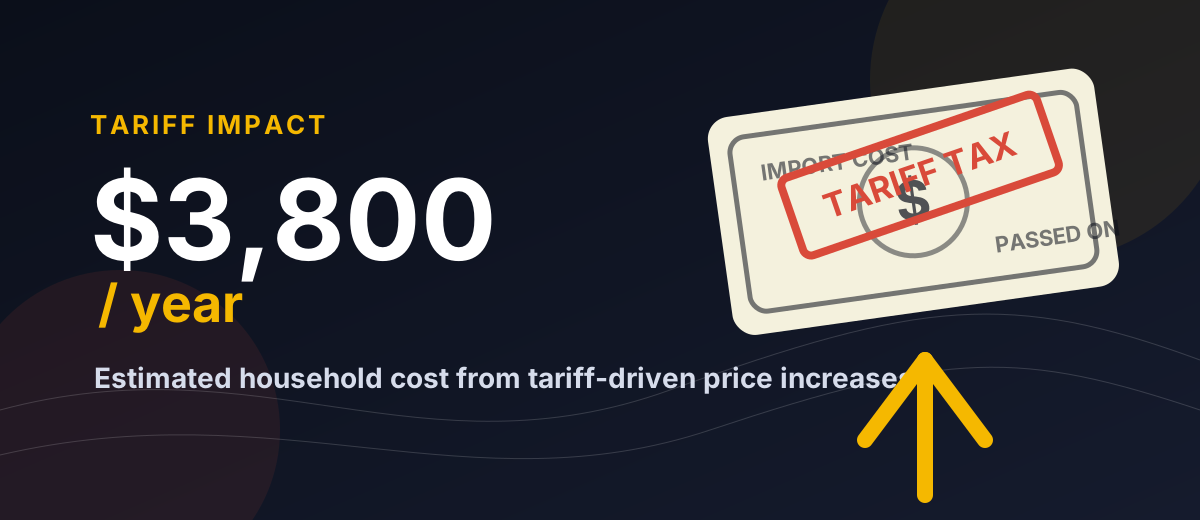
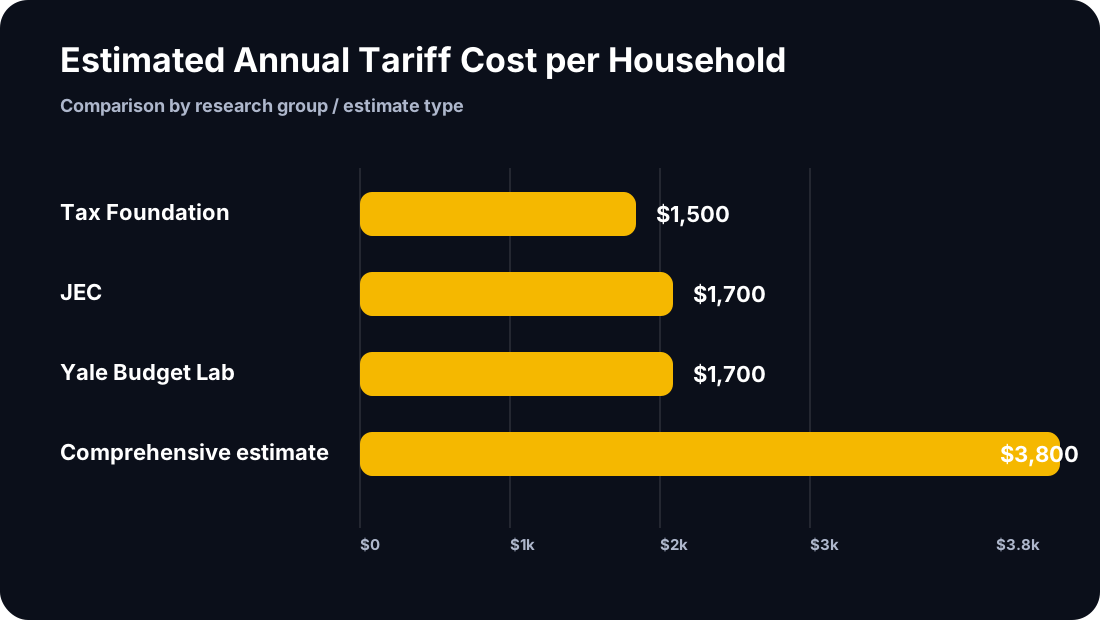
The numbers are real and they're adding up fast. Depending on which research group you look at, the average American household is paying somewhere between $1,300 and over $3,800 more per year as a direct result of current tariff policy.
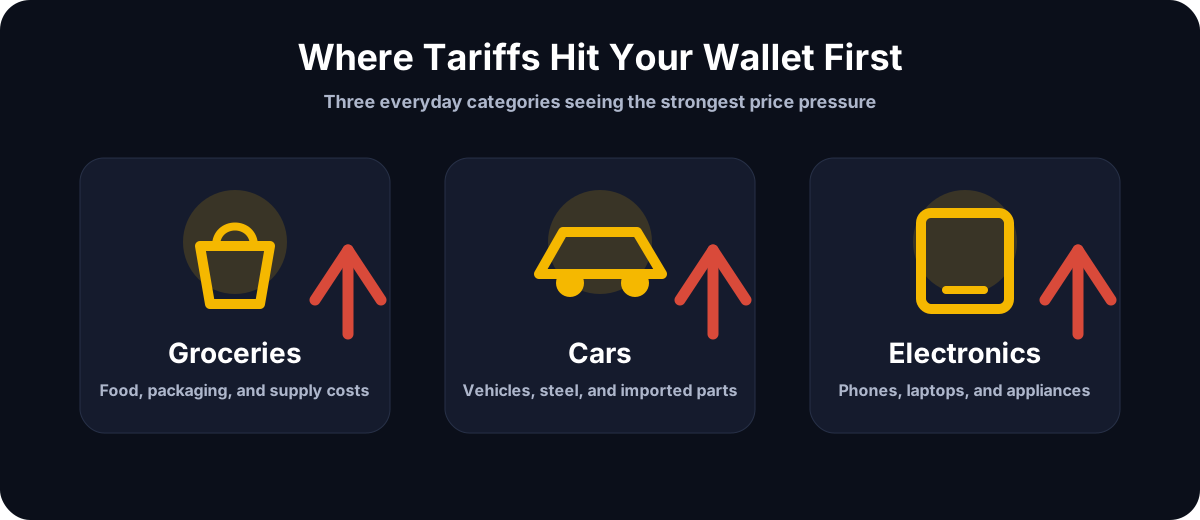
The three categories where you're feeling it most:
Groceries: Food retailers operate on razor-thin margins, which means they have very little room to absorb cost increases. When tariffs raise the price of imported food products or the packaging and equipment used to produce domestic food, those costs get passed to you almost immediately.
Cars: Tariffs on imported vehicles and auto parts have pushed new car prices higher. Whether you're buying foreign or domestic, the ripple effects touch nearly every manufacturer.
Electronics: The U.S. imports a massive share of its consumer electronics, much of it from countries now subject to elevated tariffs. Laptops, phones, appliances — these categories have all seen notable price increases.
Want to see exactly how much the current tariff policy is costing the average American household each year? Read our full breakdown here →
Tariffs vs. Inflation: Key Differences You Need to Know
| Tariffs | Inflation | |
|---|---|---|
| What it is | A tax on imported goods | A general rise in price levels |
| Cause | Government trade policy | Multiple: money supply, demand, supply chains, tariffs |
| Scope | Specific imported categories | Economy-wide |
| Who controls it | The executive branch | Federal Reserve + market forces |
| How to respond | Swap brands, buy domestic alternatives | Adjust budget, invest in inflation-resistant assets |
The bottom line: tariffs are one tool that feeds into inflation. They are not the whole picture, but right now they are a bigger piece of it than most people realize.
What Should You Do About It?
You can't vote on tariff policy between elections. But you can make smarter moves with your money right now.
1. Audit the categories hitting you hardest. Track your grocery, transport, and electronics spending over the last three months. You may be surprised where the increases are concentrated.
2. Shift to domestic alternatives where it makes sense. Not always possible, but in some categories — food, household goods — buying American-made products sidesteps tariff markups entirely.
3. Delay discretionary big purchases if you can. If you're planning to buy a car or replace electronics, the next 12–18 months could see price pressure ease if trade negotiations shift. Waiting has a real dollar value right now.
4. Treat this as an inflation environment. Even if "official" inflation numbers stay moderate, your real cost of living may be rising faster. That means revisiting your budget, your savings rate, and how your money is positioned.
Frequently Asked Questions
Are tariffs the same as inflation?
No. Tariffs are a specific government policy that taxes imported goods. Inflation is the general rise in prices across the economy. Tariffs can contribute to inflation when they're broad enough and businesses pass costs onto consumers — which is happening in 2026 — but they are not the same thing.
Who actually pays for tariffs?
American consumers and businesses, not foreign countries. Research from the New York Federal Reserve confirms that roughly 90% of tariff costs are absorbed domestically, either by businesses eating into their margins or by consumers through higher prices.
How much are tariffs costing American families in 2026?
Estimates vary by methodology. The Tax Foundation puts the figure around $1,500 per household. The Joint Economic Committee estimated over $1,700. Other analyses that account for broader economic effects — including downstream business costs — put the figure significantly higher, with some estimates reaching $3,800 or more per household annually.
Will tariff-driven price increases go away on their own?
Not automatically. Tariff costs typically stay elevated as long as the tariffs remain in place. Some businesses may find ways to reduce their import reliance over time, but the structural cost increase tends to be sticky.
Is the Federal Reserve raising rates because of tariffs?
Tariff-driven inflation complicates Fed policy significantly. When prices rise because of supply-side cost pressures, like tariffs, rather than excess demand, raising rates is a blunter instrument — it slows the economy without directly addressing the source of inflation. The Fed is watching tariff data closely in 2026, but the relationship between tariff policy and rate decisions is indirect.
The Bottom Line
Tariffs and inflation are not the same thing — but right now, one is feeding the other. The broad, sustained tariff policy currently in place is pushing up prices in categories that touch everyday life, and businesses that spent 2025 absorbing those costs are increasingly passing them on in 2026.
Understanding this distinction helps you stop blaming the wrong thing and start making smarter decisions with your money. You can't control what happens at the trade negotiating table. You can control how prepared you are for what happens at the checkout counter.
Next read: Trump's Tariffs Are Costing You $3,800 a Year — Here's the Full Breakdown →